
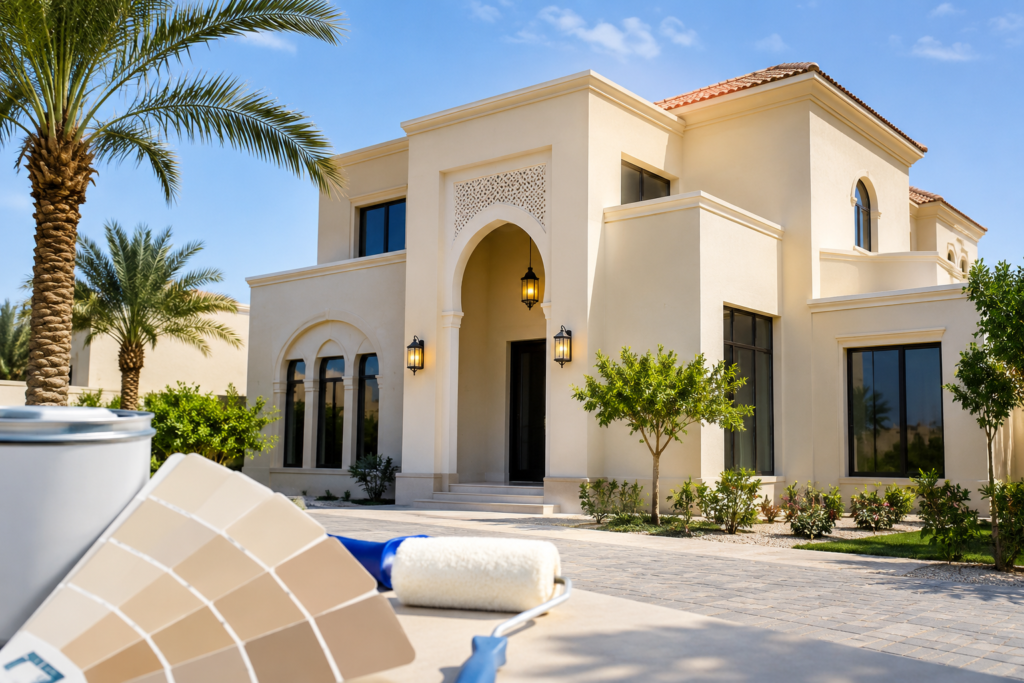
Best Exterior Paint for Villas in Saudi Arabia: How to Choose the Right Finish
Choosing the Best Exterior Paint for Villas in Saudi Arabia involves more than selecting an attractive colour. The right paint should be suitable for intense sunlight, high temperatures, dust, humidity, and occasional heavy rain while helping your villa maintain its appearance. In coastal cities such as Jeddah, moisture and airborne salt can also affect exterior surfaces, making paint selection and surface preparation particularly important.
Whether you are building a new villa or renovating an older property, understanding different paint formulations, finishes, and wall coatings will help you make a practical decision. This guide explains how to compare exterior paints, choose suitable colours, and select a finish that matches your property’s architecture and maintenance requirements.
Why Exterior Paint Selection Matters in Saudi Arabia
Exterior walls face different challenges from interior surfaces. They receive direct sunlight, experience temperature changes, collect dust, and may be exposed to moisture depending on the location and building design.
In Saudi Arabia, these conditions make durability and weather resistance important considerations. A coating that performs well on a shaded wall may not deliver the same results on a west-facing elevation exposed to strong afternoon sunlight.
The right exterior paint can help you:
- Maintain an attractive appearance for longer.
- Protect suitable wall surfaces from weather-related deterioration.
- Reduce premature peeling, flaking, and fading when properly selected and applied.
- Make routine cleaning and maintenance easier.
- Create a finish that complements the villa’s architectural design.
However, paint alone cannot resolve every exterior wall problem. Structural cracks, persistent dampness, damaged plaster, and poor drainage should be addressed before painting begins.
What Makes the Best Exterior Paint for Villas in Saudi Arabia?
There is no single paint formulation that suits every villa. The right choice depends on the wall substrate, environmental exposure, desired appearance, and the manufacturer’s technical specifications.
Resistance to sunlight and UV exposure
Strong sunlight can gradually affect the appearance of exterior paint. Some colours fade more noticeably than others, while certain coatings may lose their original finish over time.
Look for products specifically formulated for outdoor use. Check the technical data sheet for UV resistance, colour-retention properties, and recommended application conditions.
Colour selection matters, too. Light shades such as cream, beige, and off-white generally absorb less solar energy than darker shades under comparable conditions. They can be practical options for villas exposed to strong sunlight.
Performance in high temperatures
An exterior coating must suit the local climate, but the conditions during application are equally important.
Painting a wall that is excessively hot can cause the coating to dry too quickly, potentially affecting adhesion and the final appearance. Follow the manufacturer’s limits for air temperature, surface temperature, humidity, and drying conditions.
For walls exposed to intense afternoon sunlight, schedule painting during suitable conditions rather than applying paint simply because the weather is dry.
Resistance to dust and dirt
Dust accumulation is a practical concern for exterior walls throughout many parts of Saudi Arabia. Rough surfaces and deep textures can collect more dirt than smoother alternatives.
If easy maintenance is a priority, compare washable exterior formulations and ask the supplier about suitable cleaning methods. The coating should tolerate routine maintenance without losing its finish.
Moisture and weather resistance
Exterior walls may encounter rain, humidity, condensation, and moisture entering through cracks or poorly sealed joints. In coastal locations such as Jeddah, airborne salt can create additional maintenance challenges.
Choose a weather-resistant coating according to the wall substrate and its exposure. Water resistance does not mean a product is suitable for permanently damp walls or areas exposed to water pressure.
Identify and correct moisture problems before painting. Where necessary, use compatible primers, sealants, or specialist waterproofing systems.
Types of Exterior Paint for Villas in Saudi Arabia
Understanding the available paint types makes it easier to compare products and choose a coating based on performance rather than appearance alone.
Acrylic exterior paint
Acrylic exterior paints are widely used on masonry and rendered walls when the formulation is designed for the particular substrate.
Depending on the product, they can provide good adhesion, colour retention, flexibility, and resistance to outdoor exposure. Many water-based acrylic products are also convenient to apply.
Consider an acrylic exterior coating when you want:
- A choice of colours and finishes.
- A product specifically formulated for exterior masonry.
- A practical balance between appearance and maintenance.
- Compatibility with an appropriate masonry primer.
Not all acrylic paints offer the same performance. Review the product specifications instead of assuming that every formulation provides identical protection.
Elastomeric wall coatings
Elastomeric coatings form a more flexible film than conventional paints. Certain systems can accommodate limited movement in suitable substrates and bridge small, non-structural cracks within their stated performance limits.
Before choosing one, check its crack-bridging capacity, substrate requirements, vapour permeability, and application instructions.
These coatings are not a replacement for repairing structural cracks or correcting water ingress.
Mineral and cement-based coatings
Mineral-based and cementitious coatings can suit particular masonry and cement-based surfaces. Their compatibility depends on the formulation, wall condition, and curing requirements.
Confirm that the selected product is intended for exterior use and that its preparation requirements match the existing surface.
Decorative exterior paint
Decorative exterior paint gives a villa a distinctive appearance through texture, colour, and surface effects.
Options include smooth finishes, subtle sand-like textures, patterned effects, and coatings designed to create the appearance of natural materials. The choice should complement the architecture while remaining practical for local environmental conditions.
For a modern villa, a smooth finish can create a minimalist look. For a traditional design, a decorative texture can add depth and character.
How to Choose the Right Exterior Paint Finish
The finish affects the villa’s appearance, the visibility of surface imperfections, and how easily the walls can be cleaned.
Smooth finish
A smooth finish creates a neat, contemporary appearance. It works particularly well on properly prepared walls with an even plaster surface.
Because the surface has fewer recesses, it may be easier to clean than a heavily textured wall. However, uneven plaster and surface defects can become more noticeable.
Choose this finish when the wall is in good condition and you prefer a simple, modern exterior.
Matte or low-sheen finish
Matte finishes create a soft, understated appearance and can reduce the visual prominence of minor surface imperfections.
Cleaning performance varies by formulation. Some exterior matte paints offer improved washability, while others require more careful cleaning.
Check the manufacturer’s cleaning recommendations if the villa is exposed to frequent dust or splashes.
Satin and other sheen finishes
Some exterior coatings are available in satin or other sheen levels. These can create a slightly reflective appearance and may be easier to clean, depending on the product.
Higher sheen can also make surface irregularities more visible. Apply a sample to a small area and examine it under natural daylight before deciding.
Textured exterior wall paint
Textured exterior wall paint adds depth and creates a decorative architectural effect. Different grain sizes and patterns can be used on boundary walls, entrance features, columns, and main elevations.
Maintenance is important when choosing a texture. Deep grooves may trap dust, and cleaning can be more difficult than with a smooth surface.
For a balanced design, consider using a decorative texture on selected architectural features and a simpler finish across larger wall areas. Check the product’s specifications and exterior suitability before application.
Choosing Exterior Paint Colours for Villas in Jeddah
Jeddah’s coastal setting makes moisture exposure an important consideration when selecting exterior paint. Buildings may face high humidity, salt-bearing air, intense sunlight, and seasonal rainfall.
Evaluate each elevation separately because walls facing different directions may experience different levels of sunlight and moisture.
Consider coastal exposure
Walls regularly exposed to salt-bearing winds may require more careful cleaning and surface preparation. Remove loose dirt, salt deposits, chalking, and other contaminants using a method suitable for the substrate.
Allow the surface to dry as required and apply a compatible primer before the finishing coat. Painting over contamination can compromise adhesion and contribute to premature coating failure.
Select colours that suit the architecture
Popular exterior paint colours for villas include:
- Warm white with beige accents for a bright, timeless appearance.
- Sand and cream for a soft, natural look.
- Light grey with white detailing for contemporary architecture.
- Muted earthy shades for a subtle finish.
- Darker accent colours for entrances, trims, and selected architectural features.
Lighter colours generally absorb less solar energy than darker colours under comparable conditions. However, colour choice should also account for dust visibility, roof colour, neighbouring buildings, and the villa’s overall design.
For example, beige can complement stone features and create a warm appearance. As a colour reference, PJ-21 Beige decorative paint is described by Asseeb Paints as a water-based decorative product containing sand and fine stones. Confirm its intended application and suitability for your particular exterior surface before choosing it.
Exterior Wall Coatings in Saudi Arabia: Why Preparation Matters
Even a high-quality coating can fail if the surface is poorly prepared. The condition of the wall and the quality of application are essential to the finished result.
Step 1: Inspect and repair the surface
Check for loose paint, damaged plaster, cracks, powdery surfaces, and signs of moisture. Repair defects using materials compatible with the existing substrate.
Structural cracks and recurring damp patches should be assessed before cosmetic work begins.
Step 2: Clean the walls
Remove dust, loose particles, grease, chalking, and other contaminants. On coastal buildings, check for salt deposits and use an appropriate removal method.
Allow the wall to dry sufficiently before proceeding. The required drying time depends on the substrate, weather, and product instructions.
Step 3: Apply a compatible primer
Primer prepares the surface for the finishing coat. The right choice depends on whether the wall is new or previously painted, its porosity, and the type of existing coating.
A porous cement-rendered wall may require a different preparation system from an older wall with a sound existing paint layer. Follow the manufacturer’s compatibility recommendations.
Step 4: Apply the recommended number of coats
Use the specified application method, coverage rate, and recoating interval. Applying paint too thinly may reduce coverage, while applying it too thickly can cause defects.
Follow the coating system’s instructions and allow each layer to dry properly.
Step 5: Inspect the finished surface
Once the coating has dried, check for uneven coverage, missed areas, visible defects, and inconsistent texture.
Keep the product details, colour reference, batch information, and application records. These details can help with future touch-ups and maintenance.
Common Mistakes to Avoid When Painting a Villa Exterior
A few avoidable mistakes can shorten the life of an exterior coating or affect its appearance.
- Choosing interior paint for an outdoor wall.
- Selecting a product based only on its price or colour.
- Painting over damp surfaces or unresolved salt deposits.
- Applying paint during unsuitable temperatures or weather conditions.
- Using an incompatible primer and topcoat.
- Ignoring drying and recoating instructions.
- Choosing a deep texture without considering dust accumulation.
- Expecting paint to repair structural cracks or replace waterproofing.
A careful selection process helps prevent unnecessary repainting and makes it easier to maintain a consistent exterior appearance.
How to Compare Exterior Paint Products Before Buying
When comparing the best exterior paint in Saudi Arabia for your villa, use technical information rather than relying on marketing descriptions alone.
Ask the supplier or manufacturer for:
- Confirmation that the product suits your wall substrate and exterior exposure.
- The technical data sheet and application instructions.
- Recommended primers and compatible repair materials.
- Coverage per litre under the stated conditions.
- Required coats and recoating intervals.
- Available colours, sheen levels, and decorative finishes.
- Cleaning and routine maintenance guidance.
- Documented durability or weather-resistance claims and their applicable conditions.
Consider the total cost of the coating system. Paint is only one part of the budget; surface repairs, primer, labour, access equipment, and future maintenance can affect the overall expense.
A suitable product applied correctly may offer better long-term value than a cheaper alternative that requires earlier repairs or repainting.
Conclusion: Find the Right Exterior Finish for Your Villa in Jeddah
Choosing the best exterior paint for villas in Saudi Arabia requires a balance between appearance, weather resistance, surface compatibility, and maintenance. Strong sunlight, heat, dust, and coastal moisture all influence which coating and finish will work best for a particular property.
Start by assessing the wall condition, then compare suitable exterior paint formulations, primers, and finishes. Choose colours that complement the architecture and pay attention to preparation and application conditions. In Jeddah, removing salt deposits and using a compatible coating system are particularly important.
If you are planning a new villa finish or renovating an existing exterior, explore the Asseeb Paints product collection and review the available specifications. Select a solution that matches your project’s surface, appearance, and maintenance requirements.
Frequently Asked Questions
1. Which is the best exterior paint for villas in Saudi Arabia?
The right choice depends on the wall material, sun exposure, moisture conditions, and desired finish. A suitable exterior acrylic paint may work well for many masonry walls, while specialised coatings may suit particular surface conditions. Always check the technical specifications.
2. Which exterior paint is suitable for Jeddah’s climate?
Choose a coating designed for outdoor exposure and suitable for the wall substrate. In Jeddah, consider humidity, salt-bearing air, and sunlight. Proper cleaning, surface preparation, and compatible primers are essential.
3. Are light exterior paint colours better for hot climates?
Light colours generally absorb less solar energy than darker colours under comparable conditions. Cream, off-white, beige, and pale grey can be practical options, although the final choice should also suit the villa’s architecture and maintenance needs.
4. Is textured exterior wall paint suitable for villas?
Yes, textured coatings can add character to exterior walls and architectural features. However, deeper textures may collect more dust and require additional cleaning. Choose a texture that suits the building design and maintenance routine.
5. How can I make exterior paint last longer?
Prepare the wall properly, repair cracks and moisture problems, remove dust and salt deposits, use a compatible primer, and follow the manufacturer’s application instructions. Regular inspection and timely repairs can help maintain the finish.